Best Rifle Calibers for Deer Hunting: A Practical Guide
Ask ten stalkers what caliber they carry into the woods and you’ll likely get ten different answers, followed by ten firm opinions on why every other choice is wrong. The truth is less dramatic: several calibers do the job well, and the “best” one depends on the deer species you’re after, the terrain you hunt, and what you’re comfortable shooting accurately under pressure.
This guide runs through the calibers that come up most often in stalking conversations across the UK and Europe, why each one earns its reputation, and where each starts to show its limits. Think of it less as a ranking and more as a map — narrow the field to two or three options, then let range time and recoil tolerance settle the rest.
Start With the Law, Not the Ballistics Chart
In the UK, Best rifle calibers for deer hunting stalking isn’t purely a matter of preference. The Deer Act 1991 (and its Scottish equivalent) sets minimum standards for centrefire rifles used on deer, specifying a minimum bullet diameter of .240 inches and a minimum muzzle energy of 1,700 ft-lb for species like red, fallow, and sika. Roe and muntjac have slightly lower thresholds, but most stalkers simply choose a caliber that clears the higher bar so one rifle covers everything they might encounter. That legal floor is worth knowing before you fall in love with a particular cartridge, because it rules a few popular American choices out for UK use entirely.
.243 Winchester: The Sensible Starting Point
For roe deer and smaller quarry, the .243 Winchester remains a go-to. Recoil is mild enough that new stalkers can focus on shot placement rather than bracing for a punch, and factory ammunition is everywhere. Its flat trajectory makes it forgiving at the ranges most woodland and hedgerow stalking actually involves — usually under 150 metres. Where it falls short is on larger red or sika stags, where more experienced hunters generally want a bit more authority behind the bullet.
.270 Winchester: The All-Rounder
Ask a stalker who’s covered a lot of ground across different estates, and .270 Winchester comes up constantly. It bridges the gap nicely: enough energy for red deer at sensible ranges, still mild enough on the shoulder for a full day on the hill, and it clears UK legal minimums with room to spare. Ammunition choice is broad, bullet weights typically run from 130 to 150 grains, and the trajectory stays flat well past 200 metres. If someone’s buying their first “does everything” deer rifle, this is usually near the top of the shortlist.
.308 Winchester: Proven and Widely Available
The .308 owes part of its popularity to military and law enforcement use, which means ammunition and reloading components are never hard to find, even in smaller rural gunshops. It carries more energy downrange than the .243 and handles heavier deer with margin to spare, while recoil stays manageable for most shooters. Many stalkers who also hunt in continental Europe favor it because it’s a familiar chambering almost everywhere they travel, which matters if you’re renting or borrowing a rifle on a foreign estate and need ammunition you can actually buy locally rather than carrying it in your luggage.
6.5 Creedmoor: The Newer Contender
Originally built for target shooters, the 6.5 Creedmoor has found a genuine following among deer hunters over the past decade. Ballistic coefficients on typical hunting bullets are excellent, meaning less wind drift and a flatter path at longer range than older cartridges of similar bore size. It’s not a traditional choice in the UK yet, but availability has caught up quickly, and stalkers who also do some longer-range paper punching often appreciate owning one rifle that does both jobs well.
7mm-08 Remington: Overlooked but Capable
Built on a shortened .308 case necked down to 7mm, this cartridge deserves more attention than it gets. It generates noticeably less recoil than the .308 while retaining nearly identical downrange performance on deer-sized game, which makes it a smart pick for smaller-framed shooters or anyone doing long stalks where a lighter rifle matters more than raw power.
Matching the Caliber to the Optic
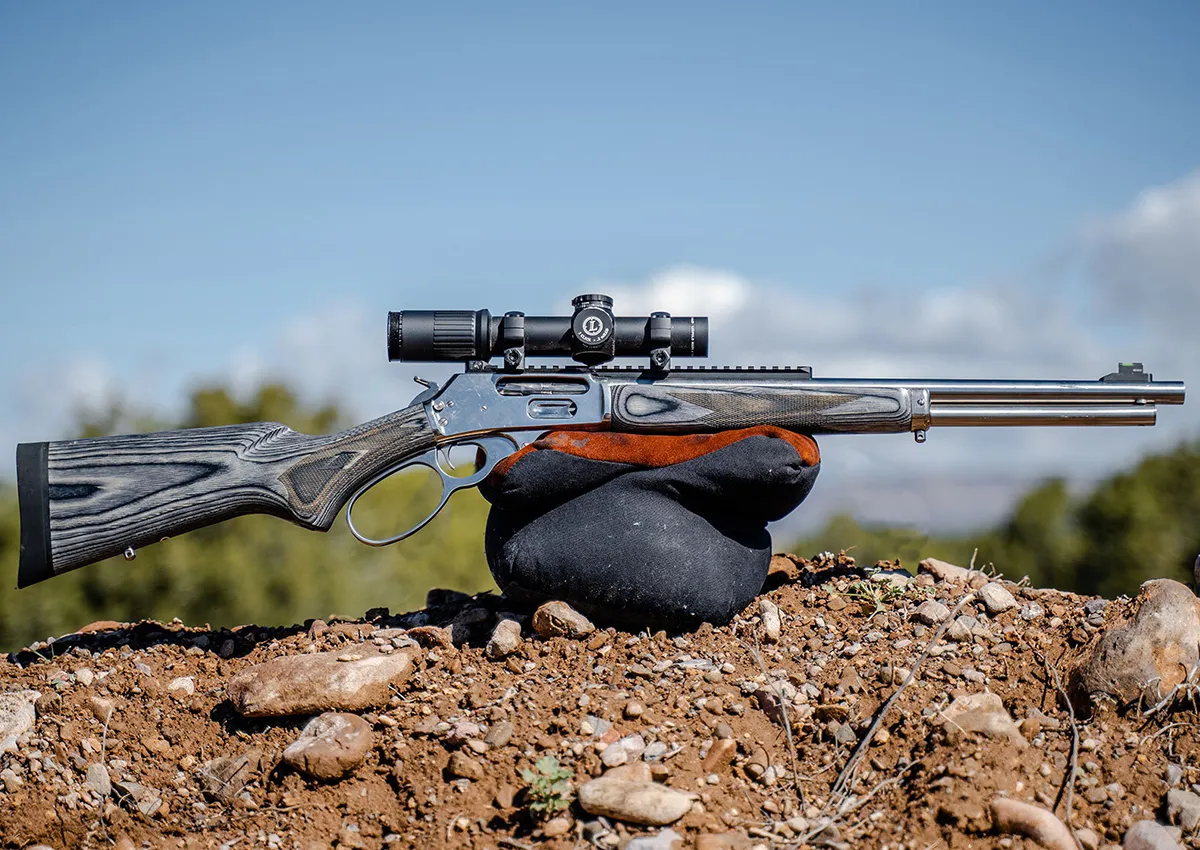
Caliber choice only tells half the story — how you see your target matters just as much as what you’re sending toward it. A flat-shooting .270 or 6.5 Creedmoor pairs naturally with a variable-power scope that lets you dial in for open ground one day and close cover the next, while a woodland .243 setup often does fine with a lower-magnification scope or even a red dot for fast target acquisition in thick brush. This is where working with a dedicated optics manufacturer pays off: Billings builds scopes, red dot sights, and precision mounts engineered around exactly this kind of real-world use, rather than a one-size-fits-all approach. For stalkers sourcing gear at scale, or brands looking to put their own name on quality glass, Billings also handles OEM manufacturing, producing optics to spec for private-label sale.
Making the Final Call
If you’re stalking roe and muntjac in tight woodland, the .243 or 7mm-08 will serve you well without beating up your shoulder. If red or sika deer are regularly on the cards, or you hunt varied terrain where a longer shot might present itself, the .270 or .308 give you more margin. And if you’re chasing flatter trajectories for extended range work alongside deer stalking, the 6.5 Creedmoor is worth a serious look.
None of these calibers is objectively “best.” The right one is the cartridge you can place accurately, shoot comfortably, and pair with glass that lets you see clearly in the conditions you actually hunt in — which is exactly the kind of setup a good scope, mount, or red dot from Billings is designed to complete.