Choosing the Right Farm Machinery: A Practical Look at What Gengjia Agri Offers
Farming has never really been about doing one thing well. A single growing season might ask you to prepare soil, plant seed, protect a crop from pests, and bring in a harvest before weather turns against you. That’s a lot of ground to cover, literally and otherwise, which is why the equipment behind each of those steps matters as much as the seed variety or the soil itself. Gengjia Agri builds machinery across that whole chain, from tractors that do the heavy pulling to drones that handle the fine, precise work overhead.
Tractors: The Starting Point for Most Operations
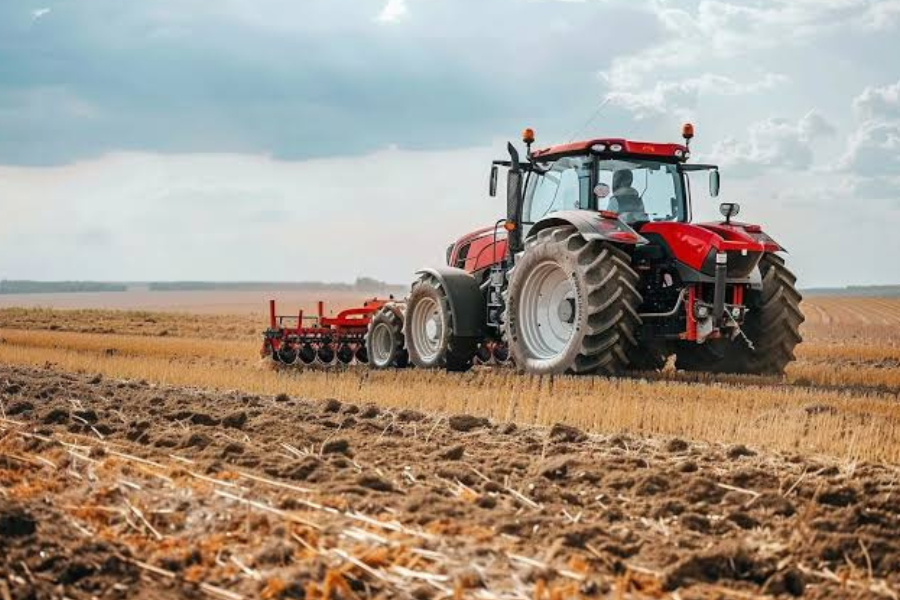
Most farms build their equipment lineup around a tractor first, and for good reason. A tractor isn’t just for plowing; it’s the base unit that powers tillers, trailers, mowers, and loaders through its PTO and hydraulic systems. Gengjia Agri’s tractor range spans compact models suited to smaller plots and orchard rows up to larger horsepower units meant for row crops and open fields. The difference between a tractor that holds up for a decade and one that starts giving trouble after a few seasons usually comes down to a few unglamorous details: how the engine handles sustained load, whether the hydraulics are rated for the attachments you actually plan to run, and how easy the machine is to service when something does wear out. Buyers looking at this category should think less about top horsepower numbers and more about matching the tractor to the actual jobs it will do week to week.
Harvesters: Timing Is Everything
There’s a narrow window every season when a crop is ready and the weather cooperates, and harvesters exist to make the most of it. Losing even a few days to a slow or unreliable machine can mean losing a meaningful share of yield to shattering, lodging, or an early frost. Gengjia Agri’s harvester lineup is built around that pressure point, with models sized for grain, rice, and other row crops. What tends to separate a good harvester from an average one isn’t raw processing capacity, it’s consistency: how well it handles wet or lodged crop, how much grain ends up damaged or lost out the back, and how quickly a clogged header or blocked auger can be cleared without pulling the whole machine apart. Those are the questions worth asking before committing to a purchase, more so than headline capacity figures.
Seeders: Getting the Foundation Right
Everything downstream of planting depends on how evenly and consistently seed goes into the ground. Uneven spacing or depth creates uneven emergence, and uneven emergence tends to show up later as yield variability that’s hard to fix once the season is underway. Gengjia Agri produces seeders designed around consistent seed placement and depth control across varying soil conditions, which matters more in fields with mixed soil types or residue from a prior crop. For operations transitioning toward reduced tillage, seeder design becomes even more important, since the machine needs to cut through residue cleanly rather than hairpinning it into the seed row. It’s a less visible piece of equipment than a tractor or harvester, but arguably one of the highest-leverage purchases a farm makes.
Sprayers: Precision Over Brute Force
Spraying is one of those tasks where more isn’t better; it’s about applying the right product at the right rate, in the right place, at the right time. Overlap wastes chemical and money, while gaps leave a crop exposed. Gengjia Agri’s sprayer range includes both trailed and self-propelled units built with boom stability and rate control in mind, since a boom that bounces across uneven ground undermines even the best nozzle setup. For farms dealing with irregular field shapes or a mix of crop types, section control and boom width flexibility end up mattering just as much as tank capacity. It’s worth thinking through actual field layouts before settling on a sprayer size, since a machine built for large, square fields won’t necessarily suit smaller or oddly shaped plots.
Drones: The Newest Tool in the Shed
Agricultural drones have moved fairly quickly from novelty to standard equipment on a lot of farms, largely because they solve a specific problem: getting eyes, or a light application, over a field without compacting soil or waiting for a ground rig to be available. Gengjia Agri’s drone lineup covers both crop monitoring and spraying applications, with payload capacity and flight time being the two figures that matter most in practice. A drone with a small tank might be fine for scouting or spot-treating a few acres of trouble spots, but it won’t keep up with spraying demands across a large block without a lot of downtime for refills and battery swaps. Farms newer to this category tend to do well starting with monitoring use, learning the flight planning and data side of things, before scaling into spray applications where the margin for error is smaller.
Putting It All Together
None of these machines work in isolation. A seeder is only as good as the tillage that preceded it, a sprayer’s value depends on how well a crop was scouted beforehand, and a harvester’s performance is shaped by decisions made months earlier at planting. That’s really the case for looking at equipment as a connected system rather than a shopping list of individual purchases. Gengjia Agri’s range across tractors, harvesters, seeders, sprayers, and drones is built with that connection in mind, giving farms a way to source equipment that’s meant to work together rather than piecing together machines from a handful of unrelated brands and hoping compatibility works itself out.