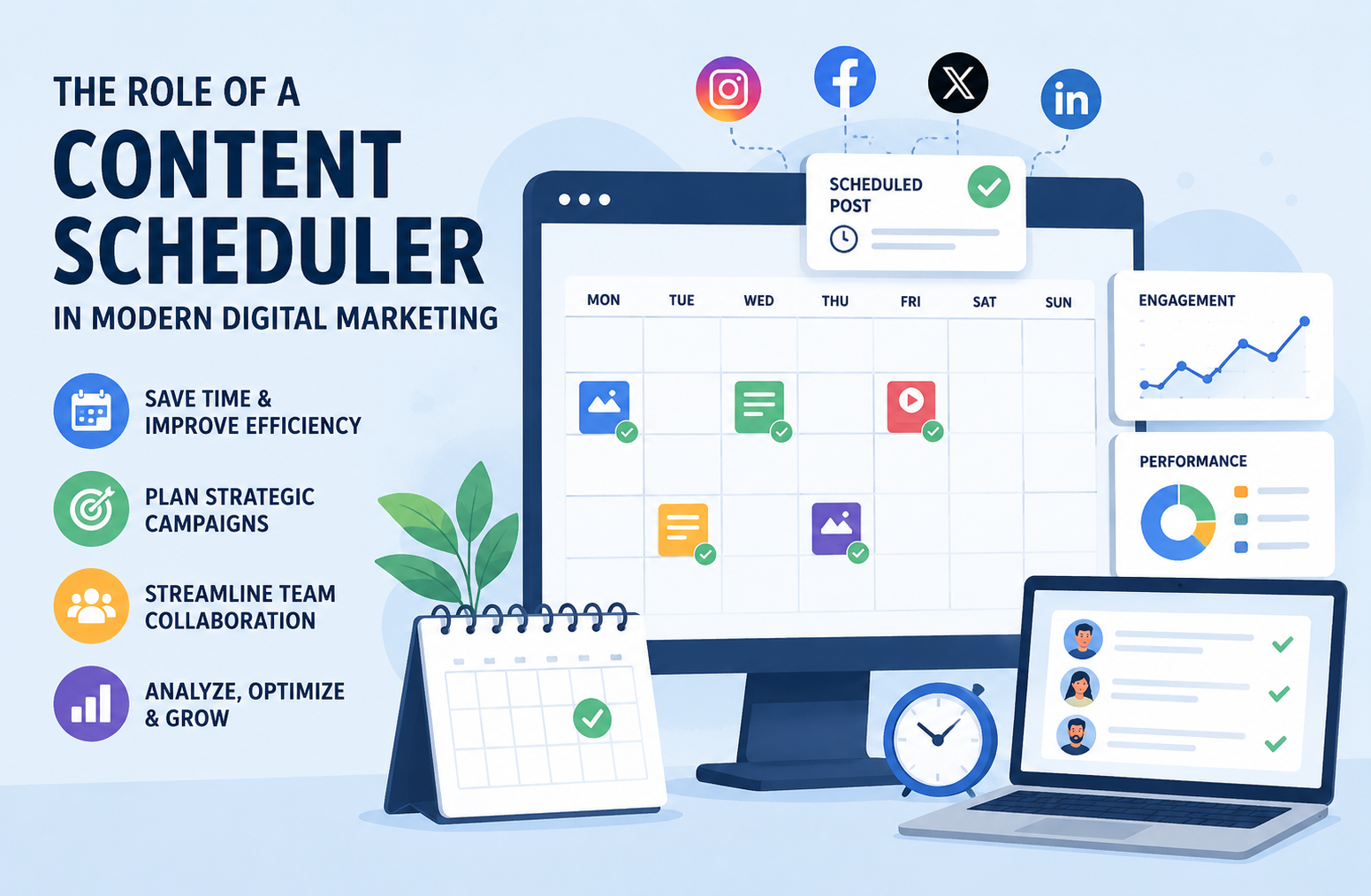
The Role of a Content Scheduler in Modern Digital Marketing
Today, with the rapid evolution of digital world, brands need to provide consistent and quality content on several platforms including social media, blogs, e-newsletters, and others. While real-time engagement is often in high demand, it can also work against the limited resources of a team and the urgent need for deadlines. That’s where a content scheduler can come into handy. A content scheduler is more than just a calendar program; it’s a way for marketers to plan, organise and automate their messages. Otherwise, even the best campaigns can fall by the wayside of disjointed posting schedules and frantic last-minute scrambles. Digital channels are becoming numerous and audiences’ attention spans are getting shorter, so a knack for scheduling content is no longer a luxury, but a daily requirement.
Efficiency and Consistency Across Channels
One of the biggest problems that digital marketers have is producing a consistent traffic flow while not overloading their staff with content. The manual posting process can be time-consuming and is prone to human error, such as missed dates or inconsistent branding, or duplicate messages. A content scheduler can address all of these issues: marketers can batch-create and queue content up to days or even weeks ahead of time. For instance, if you’re a social media manager one morning you could create graphics and caption the entire month and load it into the scheduler. It automatically schedules each piece for publication at the best time for your brand to be active and relevant during team vacations, on holidays and weekends. This regularity fosters trust amongst their audience, as they can anticipate updates at regular intervals, making it more likely for the brand to be recognized and remain loyal. Further, scheduling frees up mental space and lets your team concentrate on other vital duties, such as community involvement or campaign evaluation instead of mundane posting logistics.
Strategic Planning and Campaign Alignment
Content that’s arbitrary doesn’t usually lead to business results. In order to make digital marketing successful, you need to have a clear story to take prospects from being aware to becoming a customer. A content scheduler is a command centre and you can see your entire editorial calendar. You can match blog content to product releases, schedule email newsletters to match the social media buzz, and make sure every channel isn’t working alone. For example, when you’re planning a summer sale, the scheduler can help you lay out a plan that can last 3 weeks – announcement posts, product spotlight posts each day, reminders in the last few days, and thank you posts later. This bird’s-eye-view avoids any duplication of promotion or conflicting messages. Also, you can schedule your content in order to align with important dates in the industry, holidays, and popular topics to make it timely and relevant. Creating a strategy and planning your posts moves marketing from a reactive to proactive approach, making it more meaningful, measurable, and goal-oriented.
Team Collaboration and Workflow Management
The team can consist of a variety of members such as writers, designers, videographers and SEO specialists, as well as managers. With no centralized system, the approval process can get out of hand—files can fall through conversations in emails, feedback can be distributed in many different chat apps, and deadlines can be missed. A content scheduler is a collaborative tool that enables all participants to view the status of the scheduled content, the person who is responsible for its production, and the progress of the content in its production process. Role-based permissions, draft reviews, and automated reminders are all features that many schedulers have. In this example, a writer submits a blog draft, which is then reviewed directly in the tool by the editor, who then adds some graphics to the blog, and the manager approves the blog for publishing on a certain date.
Analytics, Optimization, and Iterative Improvement
It’s not enough to just create content, it’s about understanding what works that will lead to growth. Today’s content scheduler apps also come with analytics dashboards, which monitor content metrics like clicks, shares, comments, and conversions, straight from the scheduled posts. You don’t have to create reports from each social network manually: get performance data in a single place. This integration enables you to ask some big questions: Was it a video on Tuesday or an infographic on Thursday? Which time was your best time for engagement? From these insights, you can tweak your schedule (for example, post at a later time, or post more of a type that is effective). There are even some high level schedulers that will provide “best time to post” suggestions based on your own past post performance with machine learning. After weeks and months, this continuous optimization process builds momentum – more people read your content, more people interact with it, and it provides better ROI. Without scheduling, you will not be able to test and fine-tune your publishing process.
Conclusion
A content scheduler’s job in today’s digital marketing world is crucial. It makes an unfocused, impulsive process into a focused, strategic operation. On the other hand, those who accept plans open up new frontiers of efficiency and effectiveness. In today’s algorithmically driven age, it’s no longer an option, but a necessity to add a content scheduler to your workflow if you want to stay in the game or be ahead of the curve for high-quality, timely engagement. The right scheduler means the right investments towards your brand’s sustainable digital future.